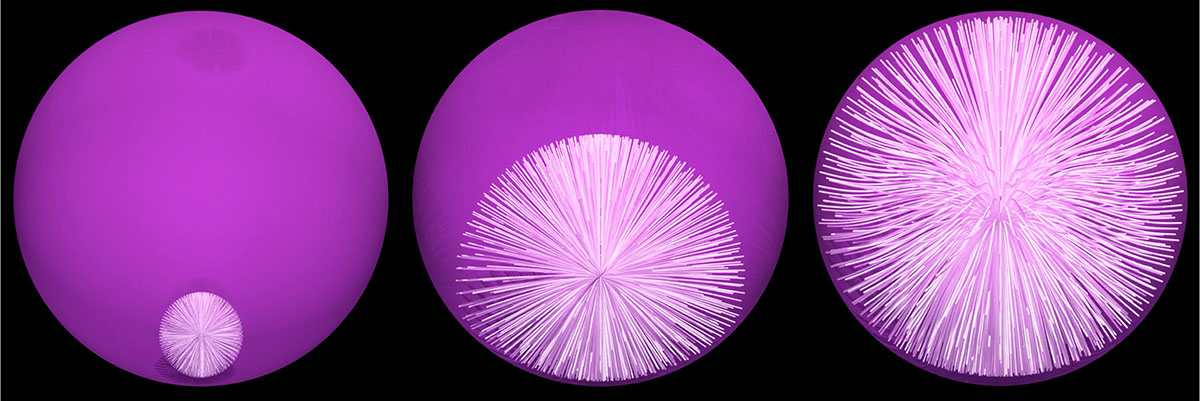
Mechanical forces and transport processes play a central role in biological function, from the flow of blood through the circulatory system to the organization and dynamics of organelles within cells. We develop mechanistic models that couple fluid flow, the deformation of flexible structures, and active biological processes to determine how living systems generate, transmit, and respond to forces. In close collaboration with experimental groups, we use simulations to test hypotheses, quantify mechanisms that are difficult to access experimentally, and investigate how disruptions in these processes contribute to disease.
Related projects: haemodynamics and the rheology of blood; centrosomal aster dynamics and positioning during cell division; and nuclear-envelope rupture and chromatin leakage in cancer cells.